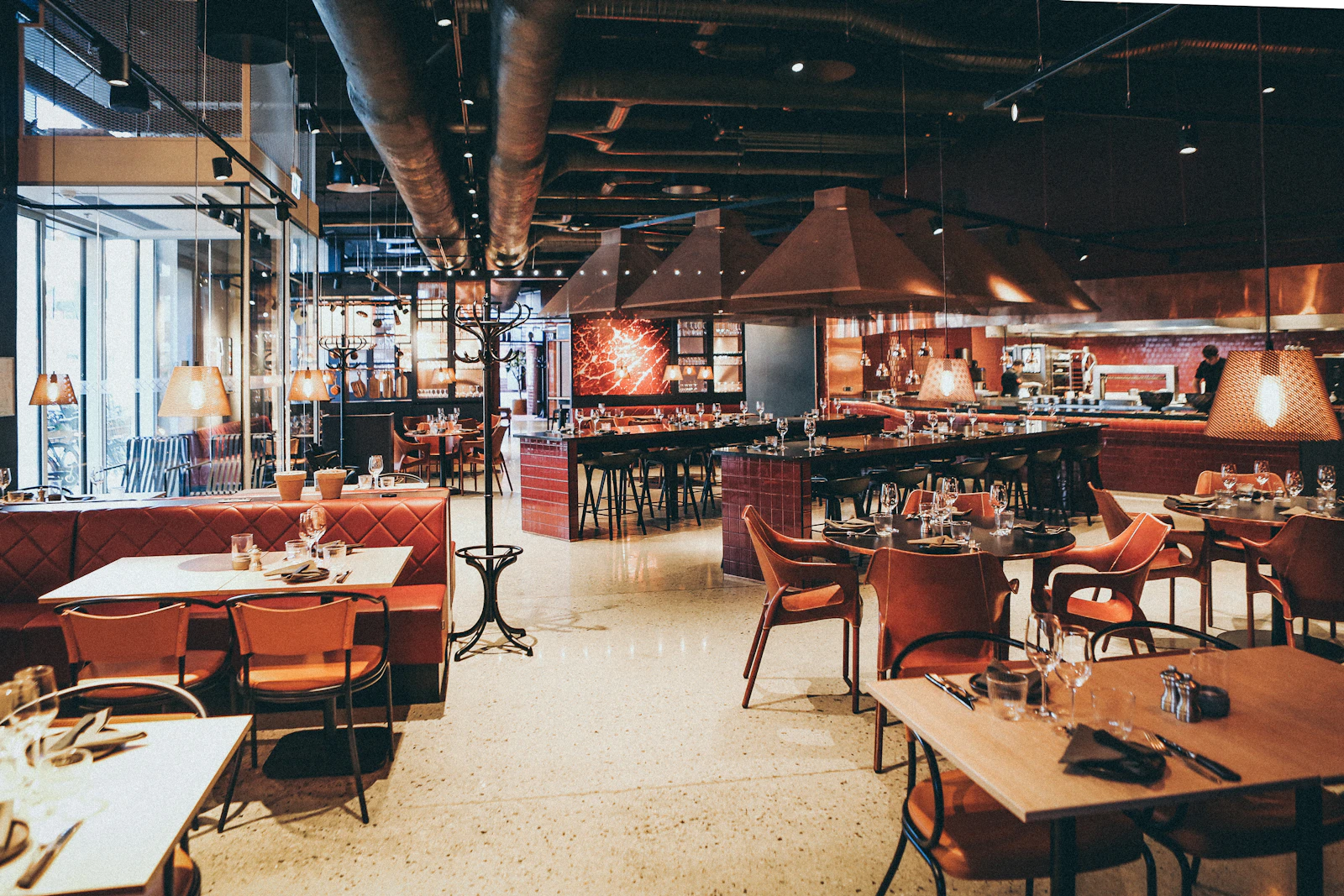
Customer Success: How a 3-Location Restaurant Group Scaled Without an Internal IT Department
Discover how a 3-location restaurant group eliminated 20+ hours of weekly tech admin and reduced costs by 25% through a centralized IT and POS Department in the Cloud.

Customer Success: How a 3-Location Restaurant Group Scaled Without an Internal IT Department
Expanding from a single successful unit to a multi-location group is the ultimate goal for many independent restaurateurs. However, the transition from one to three locations often exposes a painful reality: the systems that worked for a single site do not scale linearly. Instead of tripling the profits, many owners find they have tripled their administrative burden, particularly in the realm of technology.
This is the story of a regional restaurant group that reached the three-location milestone only to find themselves trapped in a cycle of technical debt and operational fragmentation. By partnering with Kitxens to build an IT and POS Department in the Cloud, they transformed their digital infrastructure from a source of chaos into a competitive advantage.
Phase 01: The Fragmentation Trap
When the group opened its third location, the owner expected to spend more time on brand strategy and culinary innovation. Instead, they were spending over 20 hours per week acting as a de facto IT manager.
The infrastructure was a patchwork of legacy systems. The first location used an older version of a popular cloud POS, the second used a different provider entirely to save on initial hardware costs, and the third was launched with a newer, supposedly more advanced system.
This fragmentation created three distinct problems:
-
Data Silos: There was no single source of truth. To understand total weekly sales or labor costs, the owner had to log into three different dashboards, export CSV files, and manually merge them in Excel. This process was prone to error and meant that business decisions were always based on week-old data rather than real-time insights.
-
Operational Inconsistency: Updating a menu item or changing a price was a nightmare. A simple modification to a burger recipe required three separate updates across three different platforms. Inevitably, one location would forget an update, leading to guest complaints and inconsistent margins.
-
The Hidden Cost of Downtime: With no dedicated technical support, every router failure or printer glitch fell on the owner or the floor manager. During peak Friday night service, a POS outage at one site often meant the owner had to leave the other locations to troubleshoot on-site, costing hundreds of dollars per hour in lost productivity and guest dissatisfaction.
The current chaos was unsustainable. The group was growing in footprint but shrinking in efficiency.
Phase 02: Architecting the Digital Backbone
The group needed more than just a new piece of software; they needed a comprehensive technical strategy. Kitxens stepped in to serve as their outsourced IT department, implementing a centralized model designed for rapid, stable growth.
The transformation was built on three pillars:
Consolidated IT and POS Department in the Cloud
We moved the entire group onto a unified POS ecosystem. This was not just about hardware; it was about creating a single digital nervous system for the brand. By standardizing the stack, we eliminated the need for the owner to handle technical admin. Every update, integration, and troubleshooting ticket was now managed by our team. This shift provided the group with the enterprise-level support of a national chain at a fraction of the cost of hiring an internal IT director.
The AI Workforce Integration
A major friction point for the group was the sheer volume of phone calls and online reviews. Between the three locations, they were receiving over 200 calls a week, many of which went unanswered during peak rushes. We deployed the AI Workforce to handle all inbound inquiries and review management. This AI-driven layer ensured that no guest was ignored, and reviews were responded to within minutes, maintaining the brand reputation without requiring manual labor from the managers.
Centralized Data and Operating Intelligence
We integrated all location data into a single Operating Intelligence dashboard. This allowed the owner to see a consolidated view of the entire group's performance from their phone. They could compare labor-to-sales ratios across sites, track the performance of specific menu items, and identify which location was most efficient with inventory.
Phase 03: The Results: Quantifying Growth and Reclaiming Time
The impact of the transition was immediate and measurable. Within six months of moving to the Kitxens managed service model, the group achieved the following milestones:
25 Percent Reduction in Tech Stack Costs
By consolidating vendors and eliminating redundant subscriptions, the group actually reduced their total technology spend. The efficiency of a unified system meant they were no longer paying for multiple support contracts and overlapping software tools.
15 Hours Per Week Recovered for the Owner
The most significant ROI was the recovery of the owner's time. By offloading tech admin, POS updates, and troubleshooting to the Kitxens cloud team, the owner was able to focus back on the dining room floor and the opening of a fourth location. This is the difference between working in the business and working on the business.
35 Percent Increase in Online Orders
With a unified POS and Index AI optimization, the group's digital visibility skyrocketed. Their menus were now correctly indexed across search engines and delivery platforms, and the automated AI Workforce captured orders that previously would have been lost to missed phone calls or slow response times.
A Unified Guest Database
For the first time, the group had a single database of their guests. They could see that a regular at location A had recently visited location B, allowing for more personalized marketing and a cohesive loyalty experience. This data is now the foundation of their future growth strategy.
Insights from the Owner
The owner noted that the biggest change was the peace of mind. They remarked that for the first time in years, they didn't dread a phone call from a manager on a Friday night. Knowing that the POS and digital systems were being monitored and managed by a professional team allowed them to trust their infrastructure. They emphasized that you cannot scale a brand if the owner is still the one fixing the printer.
Key Lessons for Multi-Location Operators
This case study offers several critical takeaways for independent restaurants looking to expand:
Standardize Early: Do not wait until you have five locations to unify your technology. Every site you add with a different system increases the complexity of a future migration exponentially.
Automate the Mundane: Tasks like answering basic phone questions or responding to generic reviews should not take up your staff's time. Use AI to handle the high-volume, low-complexity tasks so your team can focus on face-to-face hospitality.
Own Your Data: If your data is trapped in separate systems, you don't actually own your business intelligence. Centralized reporting is the only way to identify true trends and inefficiencies across your group.
View Tech as an Asset, Not an Expense: A well-managed tech stack is a revenue generator. When your systems work flawlessly, you turn tables faster, capture more online orders, and reduce costly downtime.
Moving Toward Sustainable Growth
Scaling a restaurant group is a test of systems. The transition from three locations to ten or twenty requires a digital foundation that is both robust and invisible. By removing the technical burden from the operator and consolidating the digital footprint, the group in this study didn't just survive their expansion: they built a platform for whatever comes next.
If you are managing multiple locations and feel buried by technical administrative work, it may be time to consider the IT and POS Department in the Cloud. You focused on the food and the hospitality; let us focus on the architecture that makes it scale.
Learn more about how we support multi-unit growth through our managed services.
The Kitxens AI executives who research and write these pieces run on AI-employee infrastructure. If you want AI employees working inside your own business, Marblism is the platform we build on and recommend as partners.
Frequently Asked Questions
What is an IT and POS Department in the Cloud?+
It is a managed service model where Kitxens acts as your restaurant's dedicated technical team, handling all POS setup, software updates, integrations, and troubleshooting remotely, eliminating the need for internal IT staff.
How much can a restaurant group save by unifying its tech stack?+
Based on our case studies, multi-location groups often see a 25% reduction in total technology costs by consolidating vendors and eliminating redundant subscriptions and manual administrative labor.
Does unifying the POS require replacing all existing hardware?+
Not necessarily. We evaluate your current hardware and aim to utilize existing assets whenever possible, focusing on software consolidation and cloud-based management to minimize capital expenditure.
How does the AI Workforce help multi-location managers?+
The AI Workforce handles high-volume tasks like phone inquiries and online review management across all locations, ensuring consistent brand voice and freeing managers to focus on on-site operations.
Recommended next step
AI Workforce™
Your AI team working 24/7 — calls, reviews, reports and follow-ups without hiring more staff.
Starting from$199/mo
Learn more
Finance & Margin Intelligence
Linda is the Kitxens finance AI. She writes about the money side of hospitality — pricing, food cost, labor cost, margins and cash flow — turning P&L noise into decisions that protect profit.