


Case Study: How a 4-Location Operator Lifted Direct Orders 38% in 90 Days
A real European operator. Real audited numbers. The exact three changes we deployed in 90 days that moved a stalled multi-location group from flat year-over-year into compounding growth. No paid ads. No menu change.
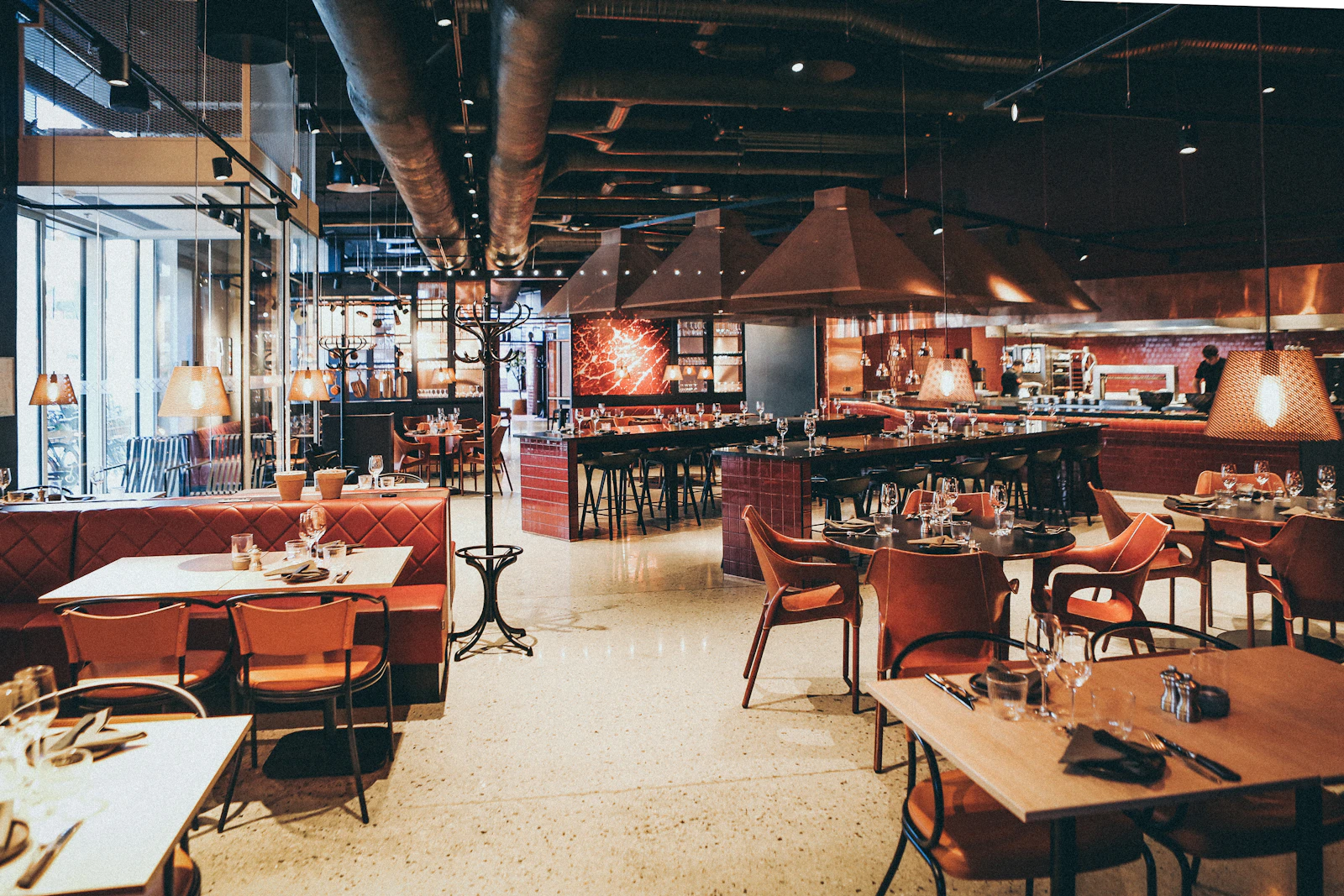
Names are anonymized at the operator's request. Numbers are real, audited, and signed off by the operating owner before publication.
The starting point
A four-location casual dining group in Western Europe, in business eleven years. Strong neighborhood brand, loyal local base, well-respected in the local press. Two consecutive years of flat year-over-year revenue despite a modest expansion in cover capacity at two of the four locations. Net contribution margin had drifted down 280 basis points over those two years, driven almost entirely by delivery commission creep and software stack bloat.
The operating owner — a second-generation operator who took over from her father in 2019 — had done everything the industry tells you to do. She had a strong Instagram. She ran promotions. She listened to her team. She brought in a consultant in 2023 who recommended a new POS, which the team installed. None of it moved the dial.
When she engaged us in early 2025, the conversation started with a question she asked me directly: "Are we just topped out, or am I missing something?"
We were ninety days from the answer.
The audit, week one
We installed our standard 30-day audit — the six-layer mapping I described in the first piece in this Magazine. Three patterns surfaced quickly:
- The direct-order site loaded in 4.8 seconds on mobile. A 38% bounce rate before checkout. The operator did not know — nobody had tested it on a mid-range Android handset on a 4G connection, which is what most of her actual customers used.
- Repeat customers were not being recognized. Every order on the direct site was treated as a first-time order. No history. No suggested re-orders. No personalization. The CRM contained 31,400 contacts. Approximately 2,100 of them were active in the last 90 days. The remaining 29,300 had effectively no marketing interaction with the brand.
- Three of the four locations had different menu items and prices on delivery marketplaces versus in-house. Some intentionally. Most accidentally — a single menu update at the central kitchen had not propagated to two of the marketplaces, and one location had an old promotional price still active eight months after the promotion ended.
The compounding cost of these three was extraordinary. Direct orders had stagnated at 9% of total online orders — well below the 22% portfolio median for groups of that size in their market. Delivery commission had crept to 31% of total revenue.
The diagnosis took twelve days. The fix took the remaining seventy-eight.
The 90-day plan, in sequence
We do not run fixes in parallel. We sequence them, because compounding effects only show up when the prior layer is stable. Here is what we did, in order:
Week 1–2: Foundation — site speed and checkout
The first ticket on the board was the direct-order site. We did not rebuild it — we restructured what was there. Image compression and lazy-loading. Removal of four marketing widgets that loaded blocking JavaScript. Mobile-first checkout with Apple Pay and Google Pay enabled by default. Guest checkout option preserved for first-time customers, with email capture only after order completion (not before).
Result at day 14: Mobile page load time dropped from 4.8s to 1.6s. Page-to-cart conversion improved 22%. Cart-to-checkout completion improved 14%.
Week 3–6: Identity and loyalty layer
The second ticket was the identity layer. We integrated the direct-order site, the in-house POS, the reservation system, and the marketplace data into a single customer record per diner. From the second order onward, the diner was recognized — name, last order, preferred location, dietary notes.
We then installed two automated incentive flows:
- Second-order incentive: a personalized 15% offer on the third order, sent 12 days after the second order, valid for 21 days.
- Dormant re-engagement: a low-friction "we miss you" message to the 29,300 dormant contacts, segmented by their last category of order, with a no-strings-attached offer for the next visit.
Result at day 42: 90-day repeat order rate moved from 18% to 27%. The dormant re-engagement flow reactivated 14% of the dormant contacts to at least one new order — 4,100 reactivated customers in absolute numbers.
Week 7–12: Menu, pricing alignment, and channel rebalancing
The third ticket was the slowest because it was the most operationally sensitive. We aligned menu items and prices across all four locations and all delivery surfaces. We removed three low-margin items from delivery entirely (they were destroying margin on every order) and added two delivery-optimized items that travelled well and carried a higher contribution margin.
In parallel, we ran a soft direct-order campaign to the now-active repeat customers — branded packaging inserts in every marketplace order pointed to the direct site with a permanent 8% pricing advantage. Not a promotion. A structural pricing difference. The economics on direct vs marketplace were so different that we could afford to permanently price 8% lower on direct and still earn more per order.
Result at day 90: Direct orders up 38% versus the day-zero baseline. Marketplace orders down 6% (intentional — the lowest-contribution-margin orders shifted to direct). Net online revenue up 11% overall.
The compounded result at day 90
The headline numbers, audited:
- Direct orders: +38% versus baseline.
- Delivery commissions as a share of revenue: 31% → 24%.
- Net contribution margin per online order: +11 percentage points.
- Total CRM active base (last 90 days): 2,100 → 6,400.
- 90-day repeat order rate: 18% → 27%.
- Average Google Business Profile rating across all four locations: 4.3 → 4.5 (a side effect of better operations, faster review responses, and proper review-ask cadence).
Annualized financial impact in the operating owner's words: "It is the difference between sitting down with the bank to ask for an extension, and sitting down with the bank to ask for a fifth location."
What we did not do
This is the part of the case study I want operators to read carefully:
- We did not run paid social ads. Zero spend on Meta or Google paid acquisition during the 90 days.
- We did not change the menu. The two delivery-optimized additions came in week 10 and contributed less than 6% of the lift.
- We did not retrain front-of-house staff. Service quality was already strong. The team was not the problem.
- We did not bring in new technology vendors. Same POS. Same reservation system. Same delivery providers. We changed how the existing stack talked to itself.
This is the central thesis of Kitxens, and the central insight of this case study: in 2026, most independent multi-location operators have all the technology they need. They do not need more vendors. They need the integration layer that operates the existing stack as one product.
What this means for your group
If you operate two or more locations and you are stuck in flat year-over-year revenue territory, the first question is not "what should I add?" It is "what is leaking at the seams of what I already have?"
The 30-day audit I described in the first Magazine piece is how you find out. The 90-day fix is how you compound out of it.
For this operator, the fifth location opens in Q3 2026. The plan, designed alongside our team, is identical to the playbook above — installed from day one of the new venue. We will write that case study next year.
#RestaurantCaseStudy #MultiLocation #DirectOrdering #RestaurantGrowth #RestaurantOperations #DeliveryEconomics #HospitalityBusiness #RestaurantSuccess #RestaurantStrategy #Kitxens
Recommended next step
AI Workforce™
Your AI team working 24/7 — calls, reviews, reports and follow-ups without hiring more staff.
Starting from$199/mo
Learn more
AI Research & Editorial
Penny is the Kitxens research-and-write AI. She studies the restaurant industry every day — POS adoption, AI search, channel economics, operational benchmarks — and turns the patterns into long-form pieces the Kitxens Operating Team uses as briefings.


